Microsoft's AI Independence: What the Company's Split From OpenAI Means for the Future
Microsoft is charting its own AI course after splitting from OpenAI. Here's what this seismic shift means for developers, businesses, and the future of AI.

June 6, 2026
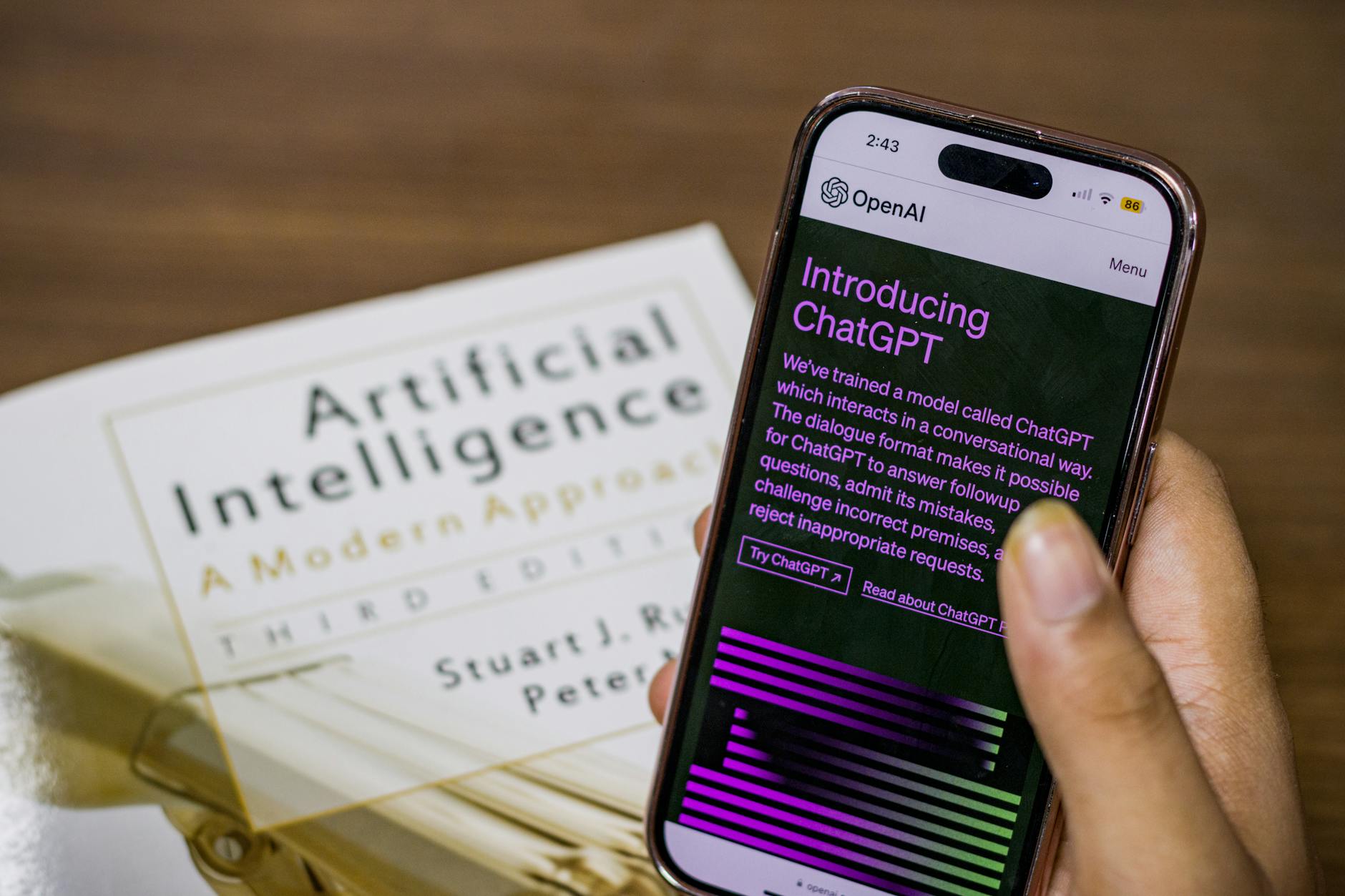
For nearly half a decade, Microsoft and OpenAI were practically synonymous. Microsoft poured over $13 billion into the AI startup, embedded its models across everything from Bing to Azure, and rode the ChatGPT wave to a historic market valuation. But in early 2026, the partnership that defined the modern AI era officially unraveled. Microsoft is now building its own foundation models, restructuring its AI division, and signaling to the world that it no longer needs OpenAI to compete. The question everyone's asking is simple: what happens next?
How We Got Here: A Partnership That Outgrew Itself
The Microsoft-OpenAI relationship was always unusual. Microsoft wasn't just an investor — it was OpenAI's exclusive cloud provider, its distribution partner, and, at times, its lifeline. But tensions had been simmering for years.
OpenAI's tumultuous board shakeup in late 2023 exposed deep governance fractures. By 2024, OpenAI had restructured into a for-profit entity, and its valuation soared past $150 billion. Meanwhile, Microsoft was quietly building internal AI capabilities that reduced its dependence on OpenAI's models. Key friction points included:
- Competing interests: OpenAI began selling directly to enterprise customers, putting it in direct competition with Microsoft's Azure AI services.
- Licensing disputes: Renegotiations over model access, exclusivity windows, and revenue sharing became increasingly contentious throughout 2025.
- Strategic divergence: Microsoft wanted tighter integration and control; OpenAI wanted independence and the freedom to partner with other cloud providers.
By February 2026, both companies confirmed what insiders had long predicted — the exclusive partnership was over. Microsoft retained certain licensing rights to existing models but would no longer serve as OpenAI's sole cloud infrastructure partner. OpenAI, in turn, announced expanded relationships with Oracle, Google Cloud, and Amazon Web Services.
What Microsoft Is Building on Its Own
Microsoft hasn't just walked away from OpenAI — it's been sprinting toward self-sufficiency. The company's internal AI division, now operating under the banner Microsoft AI, has grown to over 8,000 researchers and engineers, according to reporting from The Information in April 2026.

Here's what Microsoft's independent AI strategy looks like:
Proprietary Foundation Models
Microsoft has been developing its own family of large language models under the MAI (Microsoft Artificial Intelligence) series. MAI-2, released in beta to Azure enterprise customers in March 2026, reportedly benchmarks competitively with GPT-4.5 on reasoning, code generation, and multimodal tasks. The company also continues to invest in its smaller, efficient Phi model family, which has found traction in edge computing and on-device AI scenarios.
Custom Silicon
Taking a page from Google and Amazon, Microsoft has accelerated development of its Maia AI accelerator chips. The second-generation Maia 200, now in production, is designed to reduce Microsoft's reliance on NVIDIA GPUs and give it more control over the cost and performance of AI inference at scale. A Gartner analysis from Q1 2026 projects that companies with custom AI silicon could reduce inference costs by up to 40% compared to those relying solely on third-party GPUs.
Copilot Ecosystem Expansion
Microsoft's Copilot — embedded in Windows, Office, GitHub, Dynamics, and Security — is now being powered by a blend of proprietary and third-party models. This multi-model approach gives Microsoft flexibility. If one model provider raises prices or underperforms, Microsoft can swap in alternatives without disrupting the user experience. It's a classic platform play, and it's working. Microsoft reported in its Q3 FY2026 earnings that Copilot-related revenue exceeded $10 billion annualized.
What This Means for Developers and Businesses
If you're a developer or business leader who has been building on Azure OpenAI Service, you're probably wondering whether you need to rethink your strategy. Here's the practical breakdown:
1. Azure AI Isn't Going Anywhere — But It's Changing
Microsoft has committed to continued support for existing OpenAI model deployments on Azure through at least 2027 under its current licensing terms. However, new features and integrations will increasingly prioritize Microsoft's own models. If you're starting a new project today, it's worth evaluating MAI-2 and the Phi-4 family alongside OpenAI options.
2. Multi-Model Is the New Default
The split reinforces a trend that was already underway: the smartest AI strategies are model-agnostic. Rather than locking into a single provider, consider architectures that allow you to:
- Abstract your model calls behind an API layer
- Benchmark multiple models for your specific use case
- Switch providers with minimal code changes
Tools like LiteLLM, LangChain, and Microsoft's own Semantic Kernel make this increasingly straightforward.
3. Pricing May Shift
Competition is generally good for consumers, and this split introduces more of it. With Microsoft, Google, Anthropic, Meta, and OpenAI all fighting for enterprise AI workloads, expect aggressive pricing, expanded free tiers, and bundled offerings. Keep your procurement options open.
4. Open Source Gets a Boost
Microsoft has signaled a stronger commitment to open-source AI models as part of its independence strategy. The Phi model family has always been open-weight, and there are indications that portions of the MAI architecture could follow. For organizations with data sovereignty or compliance requirements, this is a significant development.
The Bigger Picture: An AI Industry in Realignment
Microsoft's split from OpenAI isn't happening in isolation. It's part of a broader realignment across the entire AI industry in 2026:

- Google has consolidated its DeepMind and Cloud AI divisions and is pushing Gemini aggressively into enterprise.
- Meta continues to bet on open-source with the Llama model family, now widely adopted in research and production.
- Anthropic has secured major partnerships with Amazon and expanded Claude's capabilities in regulated industries like healthcare and finance.
- Apple has finally entered the foundation model race with on-device AI capabilities that prioritize privacy.
The era of a single dominant AI partnership shaping the industry is over. We're entering a phase of diversified competition, which historically has driven faster innovation and lower costs.
What Should You Do Right Now?
If you're navigating this shift — whether as a developer, CTO, or business owner — here are three actionable steps:
-
Audit your AI dependencies. Map out where you're using OpenAI models via Azure and assess whether those integrations are covered under long-term licensing or could be affected by future changes.
-
Test Microsoft's proprietary models. MAI-2 and Phi-4 are available in preview on Azure. Run your existing workloads against them to compare performance, latency, and cost.
-
Invest in abstraction. Build or adopt middleware that decouples your application logic from any single model provider. This is the single most future-proof decision you can make right now.
Looking Ahead
Microsoft's departure from OpenAI marks the end of an era — but it also marks the beginning of something potentially more dynamic. A Microsoft that controls its own models, its own chips, and its own distribution has the kind of vertical integration that could make it the most formidable AI company on the planet. Or it could stumble without the research brilliance that OpenAI brought to the table.

Either way, the AI landscape of 2026 is more competitive, more fragmented, and more interesting than ever. The companies and developers who embrace flexibility and stay model-agnostic won't just survive this transition — they'll thrive in it.