How to Invest Your First $1,000 in 2026
You don't need a lot of money to start investing — you just need a plan. Here's exactly how to put your first $1,000 to work and build momentum that lasts.

April 23, 2026
A thousand dollars feels like both a lot and a little at the same time. It's real money — money you worked for, saved, and didn't spend. But when you look at stock prices or hear about million-dollar portfolios, it can feel like a drop in the ocean. That feeling is the enemy of wealth-building. The truth is, $1,000 is more than enough to start investing in 2026. What matters isn't the amount — it's the decision and the direction.
This guide won't tell you to get rich quick. There's no hot stock tip here. What you'll find instead is a clear, proven framework for making your first investment and building a habit that compounds over years.
Before You Invest: The $1,000 Checklist
Investing is not the first step in personal finance — it's the third. Before you put a dollar into the market, make sure two things are in place.
Read also
How to Invest Your First $1,000First: You have no high-interest debt. Credit card balances charging 20%+ interest will erase any market gains. Pay those off first. Eliminating that debt is effectively a guaranteed 20% return — no investment comes close.
Second: You have at least one month of expenses in a savings account. Not invested. Liquid. If you invest your only safety net and an emergency hits, you'll be forced to sell at the worst possible moment.
If both boxes are checked, your $1,000 is ready to work.
The Best Options for a $1,000 Investment in 2026
1. A Target-Date Index Fund
If you want one answer and nothing else, this is it. Target-date funds (like Vanguard Target Retirement 2055 or Fidelity Freedom 2055) invest automatically based on your expected retirement year. They hold a diversified mix of stocks and bonds and gradually shift to become more conservative as you approach retirement.

You buy one fund, you're done. No rebalancing. No decisions. No panic-selling triggered by CNBC headlines.
Vanguard, Fidelity, and Schwab all offer these with no minimum investment and expense ratios below 0.15%. On $1,000, that's $1.50 per year in fees.
2. A Total Market Index Fund
If you want slightly more control and a pure equity exposure, a total market index fund (like VTI or FSKAX) gives you ownership in thousands of companies across the U.S. economy. You're not betting on any individual stock — you're betting on the U.S. economy as a whole.
Historically, the U.S. total market has returned around 10% annually before inflation. That means $1,000 invested today becomes roughly $1,611 in five years, $2,594 in ten, and $6,727 in twenty — without adding another dollar.
3. A Roth IRA Before Anything Else
This is the most underused tool for new investors. A Roth IRA is a tax-advantaged retirement account where you invest after-tax money and pay zero taxes on all future growth. If you invest $1,000 at 25 and it grows to $15,000 by retirement, that $14,000 of growth is completely tax-free.
You can open a Roth IRA at Fidelity or Schwab with $0 minimum and invest inside it using any index fund you choose. The 2026 contribution limit is $7,000 per year. If you haven't opened one yet, do it today — the compound growth of tax-free money is extraordinary.
4. A High-Yield Savings Account (for money you'll need within 3 years)
If you plan to use this $1,000 within three years — for a down payment, a trip, a car — don't invest it in stocks. The market fluctuates, and short-term money belongs in a high-yield savings account. In 2026, top HYSA rates hover around 4–4.5%. That's meaningful, risk-free growth on money you need to access soon.
What to Avoid with Your First $1,000
Individual stocks: Picking individual companies is exciting but statistically unlikely to outperform a boring index fund. Studies consistently show that over 10-year periods, roughly 90% of actively managed funds — run by professionals with research teams — underperform simple index funds. You will likely do worse than the market, not better.
Crypto as your primary investment: Crypto is extremely volatile and largely speculative. Some exposure (5–10% of a diversified portfolio) is a reasonable personal choice. But putting your first $1,000 entirely into Bitcoin or altcoins is closer to gambling than investing.
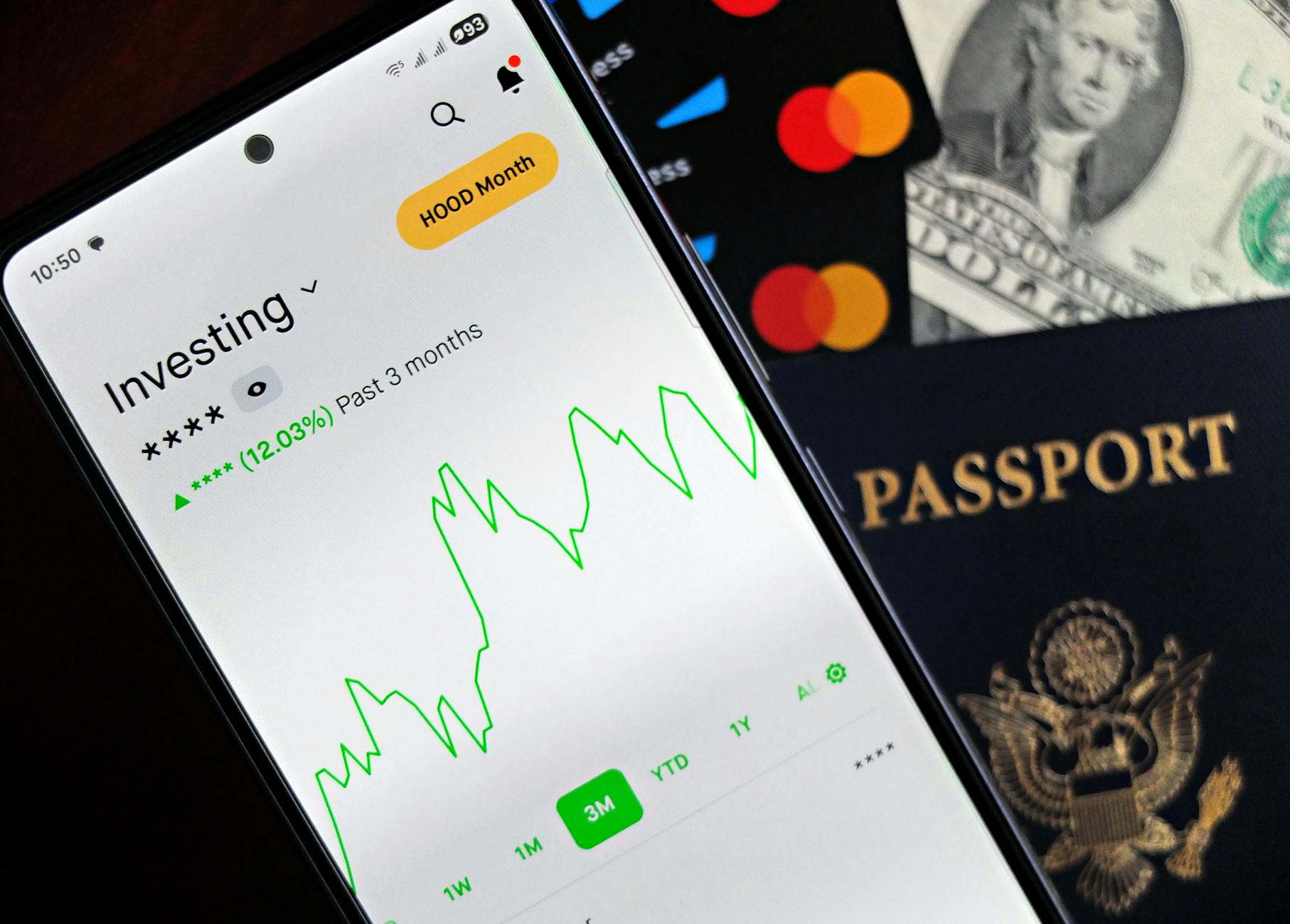
"Zero-fee" trading apps that push options: Apps like Robinhood have made investing more accessible, which is genuinely good. But their interfaces are designed to nudge you toward options trading, which is a complex product that loses money for most retail investors. Stick to stocks and funds.
Waiting for the "right time": The most common mistake first-time investors make is waiting — for the market to dip, for things to be clearer, for a better moment. Research consistently shows that time in the market beats timing the market. Even if you invest at the worst possible moment every year, you'll outperform someone who waited.
How to Actually Open an Account in 30 Minutes
-
Choose a brokerage: Fidelity, Schwab, or Vanguard are the best options. All three have $0 minimums, no account fees, and excellent tools. Fidelity is particularly beginner-friendly in 2026.
-
Open a Roth IRA (if you have earned income and are under the income limits). Otherwise, open a standard taxable brokerage account.
-
Fund the account via bank transfer. It takes 1–3 business days to clear.
-
Search for the fund you've chosen (e.g., FSKAX for Fidelity's total market fund) and place a market order.
-
Set up automatic contributions — even $50/month changes everything over time.
That's it. The most important step is placing the first order. The rest is patience.
The Most Important Thing No One Tells You
The psychology of investing is harder than the mechanics. When markets drop 20% — and they will, periodically — your gut will tell you to sell. Don't. Market downturns are when wealth is built, not when it's lost. The investors who panicked in March 2020 and sold locked in their losses. Those who stayed invested recovered fully within months.
Build your first investment, then largely ignore it. Check it quarterly, not daily. The more you monitor, the more likely you are to make an emotional decision that hurts your returns.
Your first $1,000 invested isn't just $1,000 — it's the beginning of a habit, a mindset, and a financial trajectory. The number is almost irrelevant. The decision is everything.