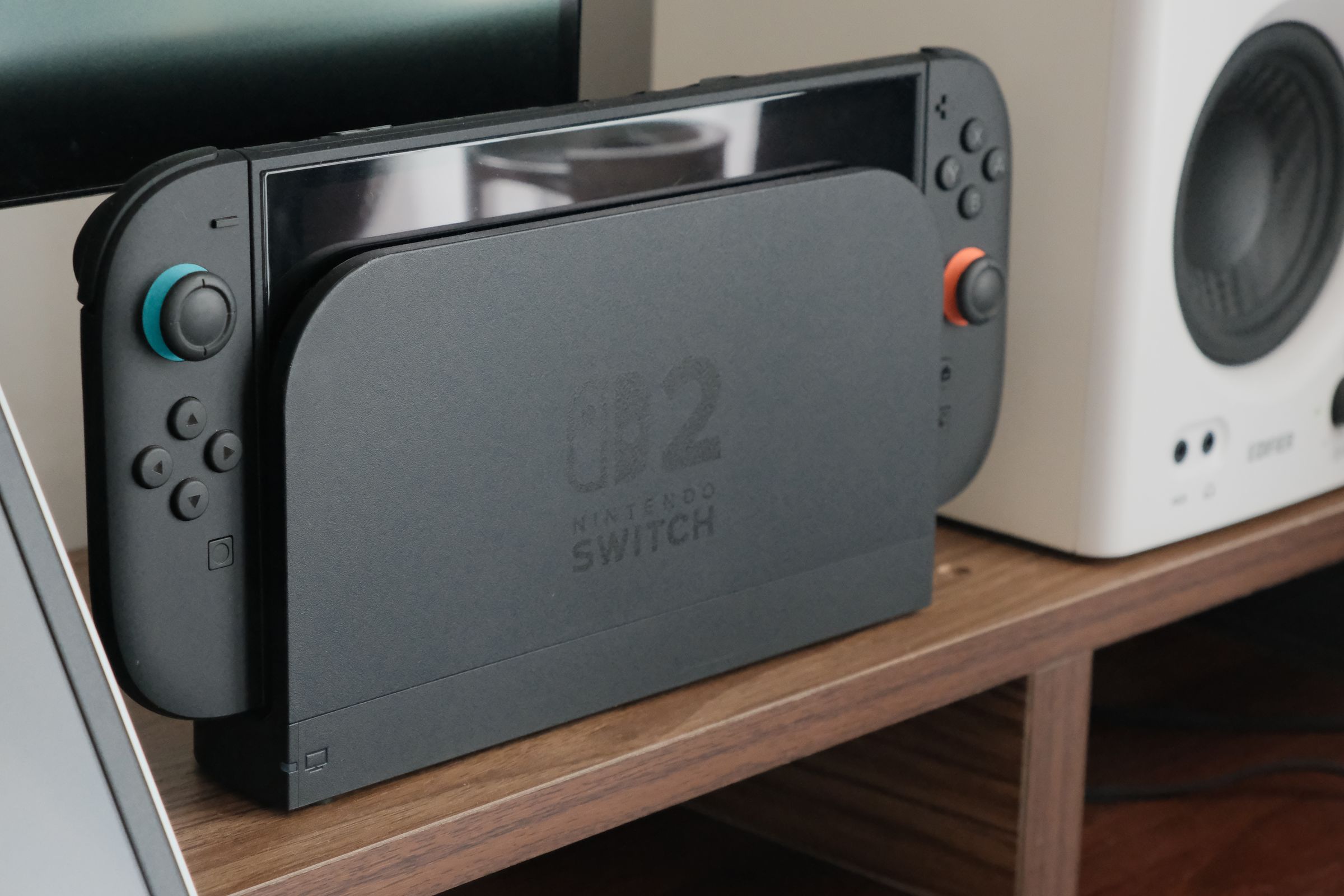
On 1 September 2026, the Nintendo Switch 2 went from $449.99 to $499.99 in the US. Europe moved to €499.99 and Canada to CA$679.99 on the same schedule. The original Switch kept its price.
This is not a review and we have no inside knowledge of Nintendo's costs. It is a summary of what Nintendo has said publicly, what the reported cost drivers are, and how a $50 change moves the decision if you were about to buy one.
What Nintendo Actually Said
Nintendo's own price revision notice gives a single sentence of explanation. The console is being repriced, in Nintendo's words, "in response to various changes in market conditions, which are expected to extend over the medium to long term."
Two things in that sentence are worth reading carefully. It does not say tariffs. And "medium to long term" is not the language of a temporary surcharge — it reads as a permanent reset rather than something that comes back down.
The notice covers the console. It does not address accessories or game pricing, and the original Switch is unaffected.
The Reasons Behind the Sentence
Nintendo president Shuntaro Furukawa has been more specific in public remarks than the notice is. Three factors have been reported:

- Memory prices. The global surge in demand for memory from AI datacentre buildouts has pushed component costs up across the industry. This is the one most often named first, and it affects every device with RAM in it — not just consoles.
- US tariffs on imported electronics.
- Exchange rates, which move against a Japanese manufacturer selling in dollars and euros.
Nintendo has put the combined cost of these at roughly ¥100 billion for the fiscal year. Whatever you make of the decision, the pressure behind it is not console-specific — it is the same pressure showing up in graphics card and handheld PC prices.
What $499 Changes
At $449.99 the Switch 2 was comfortably the cheapest way into current-generation gaming hardware. At $499.99 it is still the cheapest, but the gap to its nearest alternatives narrowed by $50, and that matters at the margins.
Against other consoles, the Switch 2 is still the entry point, and it remains the only one of them you can take on a train. The $50 does not change what the machine is for.
Against a handheld gaming PC, the comparison gets more interesting than it was. The ROG Xbox Ally X sits at $999.99 — twice the money, but it plays the Steam library you may already own rather than requiring you to buy games again. If you have a large Steam backlog, the Switch 2's advantage was always the exclusives and the price, and one of those two just got smaller.
Against waiting, there is no obvious reason to expect a reversal. "Medium to long term" and a memory shortage driven by AI demand are not the conditions under which prices drift back down. If you were holding out for a sale, the honest read is that $499.99 is the new baseline, not a peak.
The Practical Advice
If you want a Switch 2 for Nintendo's games — and that is the actual reason most people buy a Nintendo console — the $50 does not change the argument. Nothing else plays those games.

If you were choosing between a Switch 2 and a handheld PC and price was the deciding factor, it is worth redoing that comparison now rather than relying on the number you had in your head. The same is true in reverse: handheld PC prices are under the same memory-cost pressure, so this is not a case of one option getting worse while the other stands still.
And if you own the original Switch and were upgrading purely on price, that calculation moved. Its price did not change.
Sources