What Happens to Your Brain During Deep Sleep
Deep sleep isn't passive rest — it's one of the most biochemically active periods of your life. Understanding what happens during those hours changes how you think about sleep.

May 29, 2026

We spend roughly one-third of our lives asleep, and for most of human history we assumed it was essentially wasted time — the brain and body merely idling until morning. The last two decades of neuroscience have completely overturned this idea. Sleep, particularly deep sleep, is now understood to be one of the most critical biological processes we undergo, and the consequences of shortchanging it are more severe than almost any other health behavior.
The Sleep Architecture
Sleep is not uniform throughout the night. It cycles through four distinct stages approximately every 90 minutes:
- Stage 1 (N1): Light sleep, the transition from wakefulness. Lasts a few minutes.
- Stage 2 (N2): Slightly deeper sleep; brain waves slow, body temperature drops, and sleep spindles appear — bursts of neural activity thought to be involved in memory consolidation.
- Stage 3 (N3): Deep slow-wave sleep (SWS), the stage this article is primarily about.
- REM (Rapid Eye Movement): The dreaming stage, characterized by high brain activity and temporary muscle paralysis.
Deep sleep (N3) dominates the early part of the night; REM sleep dominates the later part. Cutting sleep short therefore disproportionately reduces REM, while going to bed late reduces deep sleep. Both have consequences, but they're different consequences.
The Glymphatic System: Your Brain's Overnight Cleaner
Perhaps the most significant discovery in sleep neuroscience of the past decade is the glymphatic system. In 2013, researchers at the University of Rochester published a landmark paper in Science describing a previously unknown cleaning mechanism in the brain — one that operates primarily during deep sleep.
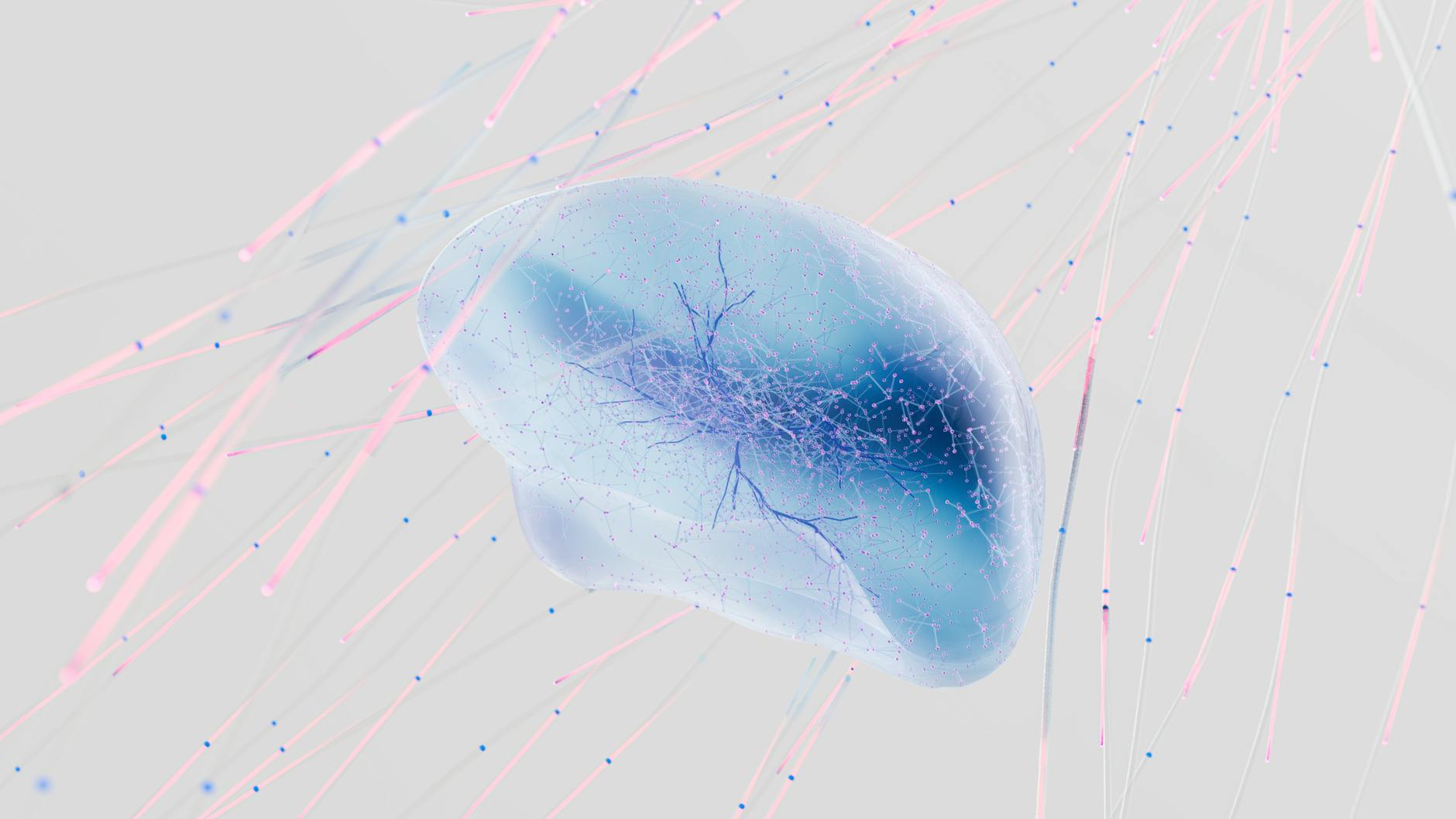
The glymphatic system works like this: during deep sleep, brain cells shrink by approximately 60%, creating space between them. Cerebrospinal fluid then flows through these expanded channels, flushing out metabolic waste products. Chief among these waste products is amyloid beta — the protein that accumulates in the plaques associated with Alzheimer's disease.
In other words, deep sleep is the mechanism by which your brain removes its own biochemical waste. Chronically poor sleep means this cleaning system operates inadequately, leading to waste accumulation over years and decades. Research now consistently links poor sleep quality to increased Alzheimer's risk, with some studies finding that even one night of sleep deprivation measurably increases amyloid beta levels in the cerebrospinal fluid.
Memory Consolidation
Deep sleep is critical for long-term memory formation. During the day, the hippocampus — the brain's memory center — absorbs new information like a temporary holding area. During deep sleep, this information is "replayed" and transferred to the neocortex for long-term storage.
This process, called systems consolidation, has been demonstrated experimentally: participants who sleep after learning material show dramatically better recall than those who stay awake. The consolidation happens specifically during slow-wave sleep, not during lighter sleep stages.
This is why "sleeping on it" before a presentation or exam is not just folk wisdom — it has a mechanistic basis in neuroscience.
Slow Wave Activity and Brain Maintenance
During deep sleep, the brain produces characteristic slow oscillations — waves of roughly 0.5–2 Hz sweeping across the cortex. These aren't merely markers of deep sleep; they appear to drive the consolidation processes and the glymphatic cleaning.

These slow waves are generated by the interaction between the thalamus and the cortex, and they're associated with the release of growth hormone — which drives physical repair and regeneration throughout the body, not just the brain.
What Disrupts Deep Sleep
Several factors specifically reduce the amount and quality of deep sleep:
Alcohol. This is perhaps the most widely misunderstood relationship in sleep science. Alcohol helps people fall asleep but severely fragments sleep architecture, suppressing REM and disrupting the slow-wave cycles. The sleep that follows drinking is neither restorative nor effective for memory consolidation.
Age. Deep sleep decreases significantly with age — adults over 60 typically get half the deep sleep of young adults, and this may be a significant contributor to age-related cognitive decline.
Blue light before bed. Light exposure, particularly in the blue spectrum (smartphones, tablets, computers), suppresses melatonin production and delays sleep onset, which compresses the overall sleep cycle and reduces deep sleep duration.
Sleep deprivation itself. Ironically, chronic sleep deprivation can alter sleep architecture in ways that reduce deep sleep efficiency — creating a vicious cycle.
How to Protect Deep Sleep
Temperature. Core body temperature must drop for deep sleep to occur. A cool bedroom — around 18–19°C (65–67°F) — facilitates this drop. Warm baths or showers 90 minutes before bed also help by drawing heat to the skin and accelerating core temperature drop.

Consistent sleep timing. Your circadian rhythm regulates sleep stage architecture. Going to bed and waking at consistent times keeps deep sleep occurring at the optimal point in the night.
Exercise. Regular physical activity, particularly moderate aerobic exercise, is one of the most robust enhancers of deep sleep duration and quality. The mechanism involves adenosine accumulation — the "sleep pressure" chemical that builds with wakefulness and physical exertion.
Limiting evening light. Reducing bright light exposure in the 60–90 minutes before bed allows melatonin to rise on schedule, facilitating earlier and more complete sleep cycles.
Why This Matters Beyond the Lab
Understanding what happens during deep sleep should fundamentally change how we think about it. Sleep isn't a passive retreat from life — it's when your brain repairs itself, encodes your experiences, and removes the molecular debris that would otherwise accumulate into disease.
Treating sleep as a variable to be optimized or minimized, as modern work culture often encourages, is a form of biological self-harm with long-term consequences that unfold too slowly to register as immediate cause and effect.
Eight hours is not laziness. It's maintenance.