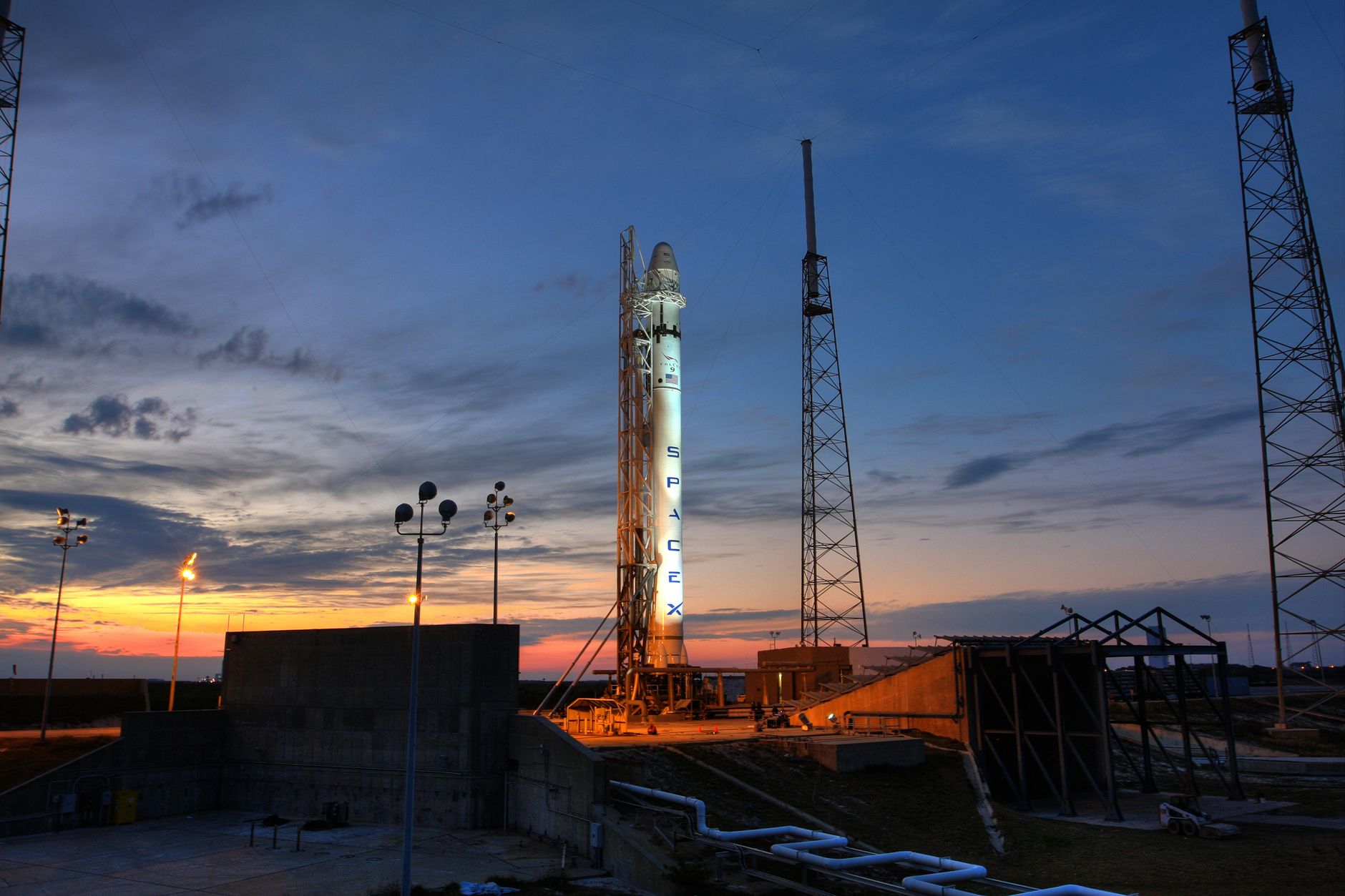
SpaceX IPO: What You Should Know Before Investing in Elon Musk's Space Company
SpaceX may finally go public — but is it the right investment for you? Here's what smart investors need to evaluate before buying shares.

June 11, 2026
After years of speculation, the prospect of a SpaceX initial public offering has never felt more real. Elon Musk's aerospace juggernaut — already valued at over $350 billion in private secondary markets as of early 2026 — is one of the most anticipated IPOs in history. Whether you're a seasoned investor or someone who simply wants a piece of the space economy, there's a lot you need to understand before committing your hard-earned money. Let's break down everything that matters.
Why the SpaceX IPO Is Generating So Much Buzz
SpaceX isn't just another tech company going public. It's a vertically integrated aerospace manufacturer, satellite internet provider, and — if Musk's vision holds — humanity's ticket to Mars. The company operates across multiple revenue-generating segments that make it genuinely unique in the public markets:
- Falcon 9 & Falcon Heavy launch services — SpaceX dominates the global commercial launch market, capturing roughly 80% of all commercial orbital launches in 2025, according to data from Bryce Tech's annual report.
- Starlink — The satellite internet constellation now serves over 5 million subscribers across 100+ countries, generating an estimated $12–14 billion in annual recurring revenue.
- Starship — The fully reusable super heavy-lift vehicle represents the future of deep space exploration, lunar missions, and point-to-point Earth transport.
- Government contracts — NASA, the Department of Defense, and the National Reconnaissance Office are among SpaceX's largest institutional customers.
This isn't a company with a single revenue stream and a prayer. It's a diversified aerospace business with real cash flow — and that's exactly what makes the IPO conversation so compelling.
What We Know About the IPO Timeline
As of June 2026, SpaceX has not officially filed an S-1 registration statement with the SEC. However, multiple credible reports from Bloomberg and Reuters throughout 2025 and early 2026 indicate that internal discussions about taking Starlink public — potentially as a separate entity — have intensified.
Musk himself has said publicly that a Starlink IPO would happen once "revenue growth is smooth and predictable." With Starlink now past the $10 billion annual revenue milestone, that threshold appears to have been met.
Key scenarios to watch for:
- Starlink-only IPO — SpaceX spins off Starlink as a standalone public company, giving investors access to the satellite internet business without exposure to the higher-risk launch and Starship programs.
- Full SpaceX IPO — The entire company goes public, offering a broader but more complex investment profile.
- Direct listing — Rather than a traditional IPO with underwriters, SpaceX could follow the playbook of companies like Spotify and Coinbase.
No matter which path is chosen, demand will be extraordinary. The question is whether the valuation will leave room for upside.
How to Evaluate the Investment
Understand the Valuation
At a $350 billion private valuation, SpaceX is already priced like a mature mega-cap. For context, that's larger than companies like Boeing, Lockheed Martin, and Northrop Grumman combined. If the IPO prices significantly higher — say $400–500 billion — you need to ask yourself: how much growth is already baked in?
A good rule of thumb: compare the price-to-revenue ratio against comparable companies. If Starlink alone generates $13 billion in revenue and is valued at $200 billion, that's roughly a 15x revenue multiple — aggressive, but not unheard of for a high-growth subscription business.
Assess the Risks
Every investment carries risk, and SpaceX is no exception. Here are the biggest ones:
- Key-person risk — Elon Musk is deeply involved in SpaceX's strategy and culture. His attention is split across Tesla, xAI, X (formerly Twitter), Neuralink, and government advisory roles. What happens if he steps back?
- Regulatory risk — FAA launch licensing, FCC spectrum allocation for Starlink, and environmental reviews for Starship launches at Boca Chica all present bottlenecks.
- Competition — Blue Origin, Rocket Lab, Amazon's Project Kuiper, and international players like China's CASC are all investing aggressively.
- Execution risk — Starship is still in its developmental phase. While test flights have shown remarkable progress, the vehicle hasn't yet achieved full mission success with payload delivery and booster reuse in a single flight profile.
- Geopolitical risk — Starlink's role in conflict zones (notably Ukraine) has made it a geopolitical lightning rod. Government customers could become liabilities in certain diplomatic scenarios.
Look at Governance Structure
Pay close attention to the share structure. If SpaceX follows the dual-class or multi-class share model common among founder-led tech companies, Musk could retain majority voting control even after going public. This means public shareholders may have limited say in corporate decisions — something that has been contentious at Tesla and other Musk-led ventures.
Practical Steps for Potential Investors
If you're seriously considering investing once shares become available, here's a concrete action plan:

-
Set your allocation limit now. Decide what percentage of your portfolio you're comfortable putting into a single high-growth, high-risk stock. Most financial advisors suggest no more than 5–10% of your total portfolio in any individual position.
-
Open a brokerage account that offers IPO access. Not all brokers provide IPO allocations. Platforms like Fidelity, Charles Schwab, and SoFi have historically offered IPO access to retail investors, though allocations are competitive.
-
Study the S-1 filing carefully. When it drops, read the risk factors section, the revenue breakdown, customer concentration data, and management's discussion of capital expenditures. Starlink's satellite replacement costs alone could be tens of billions over the next decade.
-
Don't buy at open if the price spikes. IPO-day pops can be thrilling — and dangerous. Research from Jay Ritter at the University of Florida has consistently shown that IPO stocks, on average, underperform the market over the three years following their debut. Patience often pays.
-
Consider dollar-cost averaging. Instead of going all-in on day one, spread your purchases over weeks or months to reduce timing risk.
The Bigger Picture: Investing in the Space Economy
Even if you decide the SpaceX IPO isn't right for you, the broader space economy is booming. Morgan Stanley projects the global space industry will exceed $1.8 trillion by 2040, up from roughly $630 billion in 2025. Other ways to gain exposure include:
- Rocket Lab (RKLB) — A publicly traded small-launch provider expanding into spacecraft manufacturing
- L3Harris Technologies (LHX) — Defense and space systems contractor
- iShares U.S. Aerospace & Defense ETF (ITA) — Broad sector exposure
- Procure Space ETF (UFO) — Focused specifically on space-related companies
Diversification across the sector can give you space economy exposure without the concentration risk of a single IPO.
Final Thoughts
The SpaceX IPO — whether it comes in late 2026 or beyond — will be one of the defining financial events of the decade. The company has achieved things that were considered science fiction just fifteen years ago. But excitement isn't an investment thesis. Before you invest, do the work: read the filings, understand the risks, know your allocation strategy, and resist the urge to chase hype.

The best investors aren't the ones who get in first. They're the ones who get in informed.