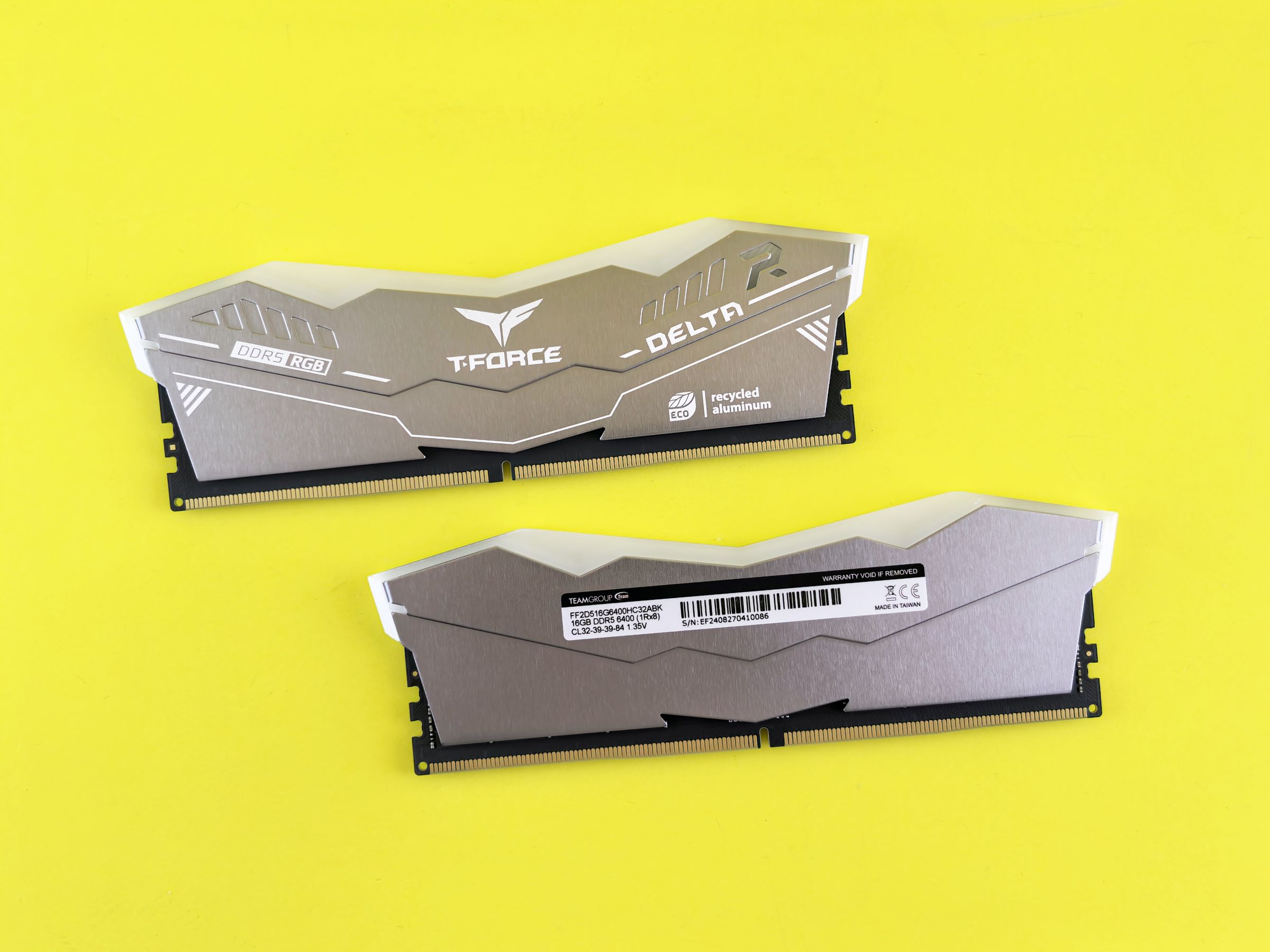
On 14 October, the cheapest 32GB kit of DDR5-6000 memory in the US cost $449.97. Tom's Hardware, which tracks that kit daily, had it at $400 in August and says RAM prices are up more than 500% in a year. A slower 32GB DDR5-4800 kit from Corsair was $399. The same kit once sold for $80.
Storage has gone the same way. From Tom's Hardware's SSD price tracker in mid-October:
- Samsung 990 Evo Plus, 1TB: $235 now, $59 at its lowest
- WD Black SN850X, 1TB: $248 now, $54 at its lowest
- Samsung 990 Pro, 2TB: $386 now, $119 at its lowest
- WD Black SN850X, 2TB: $429 now, $89 at its lowest
These prices move every week, so check them against a current tracker before you buy anything. What follows is about how to decide, not about where the cheapest listing is today.
Why This Is Happening
It comes down to AI datacentres. AI servers need enormous amounts of memory, including a specialised, expensive kind called HBM. The handful of companies that make memory chips earn more selling to datacentres, so production has moved there and less is left for PCs.
The clearest sign came last December. Micron, one of the three big DRAM makers, announced it would leave the consumer market entirely and wind down Crucial, its consumer RAM and SSD brand, by the end of February 2026. Its chief business officer said the company had decided to exit "in order to improve supply and support for our larger, strategic customers in faster-growing segments." Existing Crucial products are still covered by their warranties.
On the storage side, a senior Kioxia executive told reporters in January that the company's NAND production for the year was already sold out, and that "the days of cheap 1TB SSDs" were over.
Will Prices Come Down Soon?
None of the forecasts we found points that way. The market research firm TrendForce, in its 30 September outlook, expects the prices manufacturers pay for ordinary DRAM to rise another 10–15% this quarter, and NAND flash, the chips inside SSDs, to rise 15–20%. The pace is slowing, but prices are still going up. TrendForce also reports that PC makers expect DRAM supply "will remain tight in 2027".
So waiting is unlikely to make a needed upgrade cheaper in the next few months. It can still save you from an upgrade you didn't need.
Upgrades That Still Make Sense
1. Find out whether you're actually short of memory. On Windows, open Task Manager (Ctrl + Shift + Esc), go to Performance, then Memory, and keep it open while you do whatever feels slow. If memory use stays well below the total, more RAM will not make that task faster, at any price. If it sits near the top, the upgrade is real.
2. Replace a hard drive with an SSD. If an older PC still starts Windows from a spinning hard drive, moving to an SSD is the upgrade that changes daily use the most, and it still does at today's prices. A 1TB drive is no longer a $50 purchase, but a modest PCIe 3.0 or 4.0 drive is enough for a boot drive. The cheapest models in Tom's Hardware's tracker cost around $150 for 1TB.
3. Consider slower memory. The gap between the $449.97 DDR5-6000 kit and the $399 DDR5-4800 kit is $50. Most DDR5 systems will run slower memory. It is worth checking whether you would actually notice the difference before paying for the faster kit.
4. Buy the capacity you need, not headroom. If you need 32GB, buy 32GB. Moving to 64GB "for the future" costs twice as much when every gigabyte is at a record price.
5. If you are buying a whole PC, look at prebuilt systems and bundles. Tom's Hardware notes that price rises are reaching prebuilt PCs more slowly than loose parts. It has also seen bundles of RAM with a motherboard and processor save as much as $358.
Upgrades to Hold Off On
- Moving to a new platform purely for speed. A new processor and motherboard usually mean new DDR5 memory as well. Right now that makes it one of the most expensive upgrades you can choose.
- Replacing a working SSD with a faster one. Going from a PCIe 4.0 drive to a PCIe 5.0 one makes little sense when even the cheaper drives cost four times what they did.
- Buying spares "before prices rise further". If the part has no job to do yet, it is money tied up in something you may not need for years.
One check before any memory purchase: many recent laptops have their RAM soldered to the board, and it cannot be upgraded at all. Look up your exact model first.
Spend on the Bottleneck
Prices this high reward a narrow question: what, specifically, is making your PC slow? If it is a hard drive, an SSD is still worth it. If Task Manager shows memory running out, buy as much RAM as you need, and no more. Anything bought only to be ready for the future can wait.
Sources
- Tom's Hardware — 32GB of DDR5-6000 RAM now costs $450
- Tom's Hardware — SSD price tracking 2026
- TrendForce — AI server demand sustains memory contract price increases in 4Q26
- Tom's Hardware — Micron is winding down Crucial consumer SSDs and memory
- Tom's Hardware — Kioxia exec says the era of the cheap 1TB SSD is over